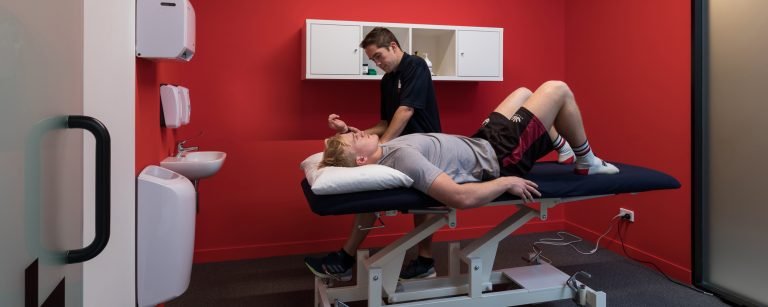
The VALD System:
Measure Better. Train Smarter. Rehab Efficiently.
Specific, precise and consistent measures.
Targeted training.
Efficient rehab.
Rehabilitation shouldn’t just be about feeling stronger, we want to be able to measure it.
Force-measuring devices have been used in professional sport and rehabilitation for many years. Technology such as the VALD system now makes this type of objective testing more accessible in the clinic, allowing us to measure strength, movement and performance throughout your rehabilitation.
Whether you are recovering from an injury, returning to sport, or simply looking to improve your physical performance, VALD gives you an opportunity to get the “athlete experience” using measurable progress to help guide a programme tailored specifically to you.
What is the VALD system?
VALD is a collection of testing equipment that allows physiotherapists to objectively measure different aspects of strength and physical performance.
Rather than relying solely on how an exercise feels or what we can see during an assessment, VALD provides us with numbers that we can track over time.
At our clinic, this includes three key pieces of equipment:
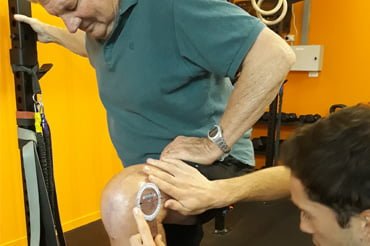
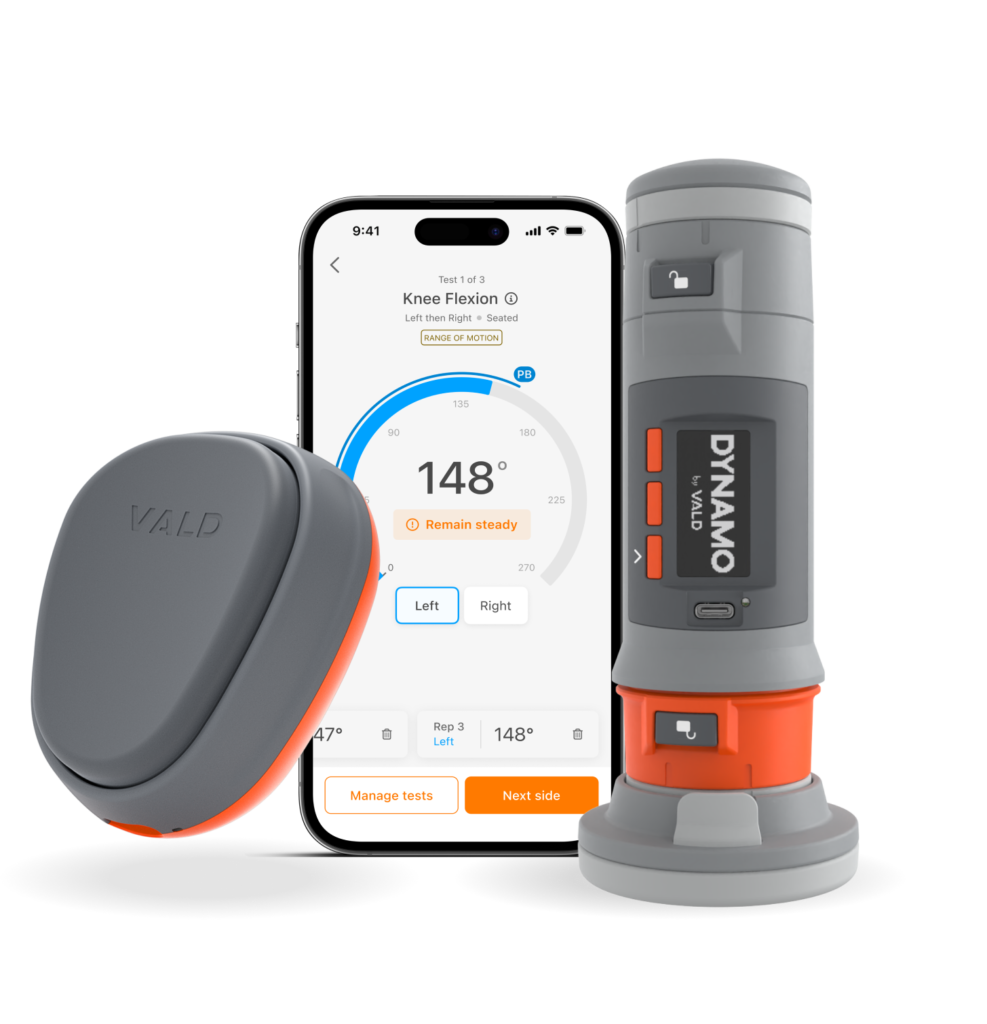
Dynamo
Handheld Strength & ROM
A handheld dynamometer is a small device used to measure the amount of force you can produce during a specific movement.
This allows us to test individual muscle groups and compare:
- Left versus right side
- Injured versus uninjured side
- Your strength over different stages of rehabilitation
- Your results against relevant reference values
For example, following a shoulder injury we may measure your external rotation strength. After several weeks of rehabilitation, we can repeat exactly the same test to see whether your strength has improved.
Instead of simply saying “it feels stronger,” we can see how much stronger it has actually become.
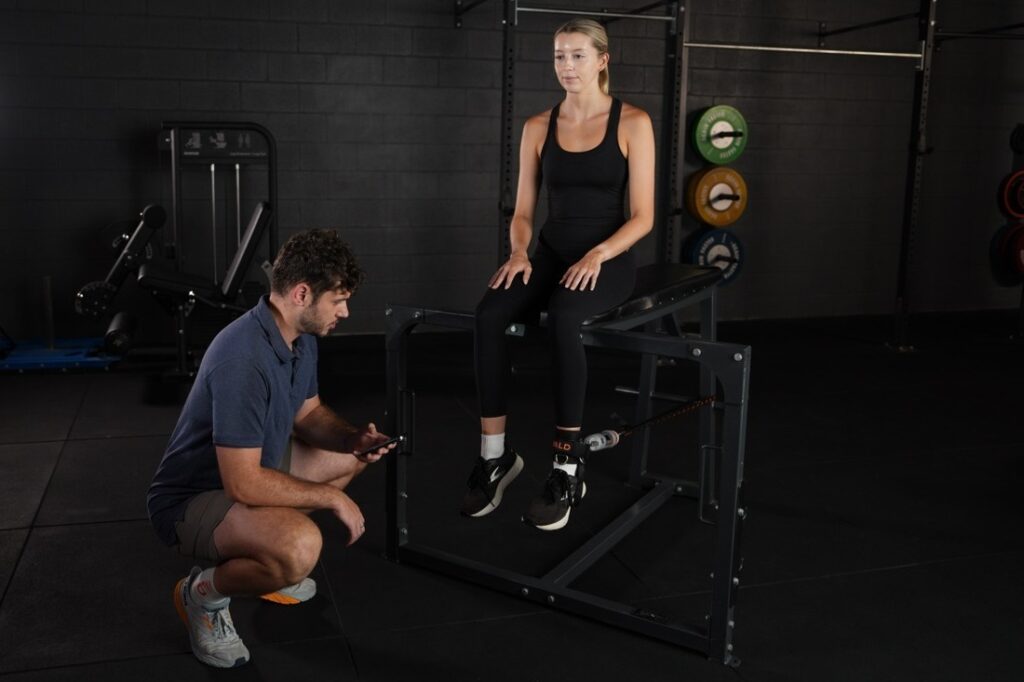
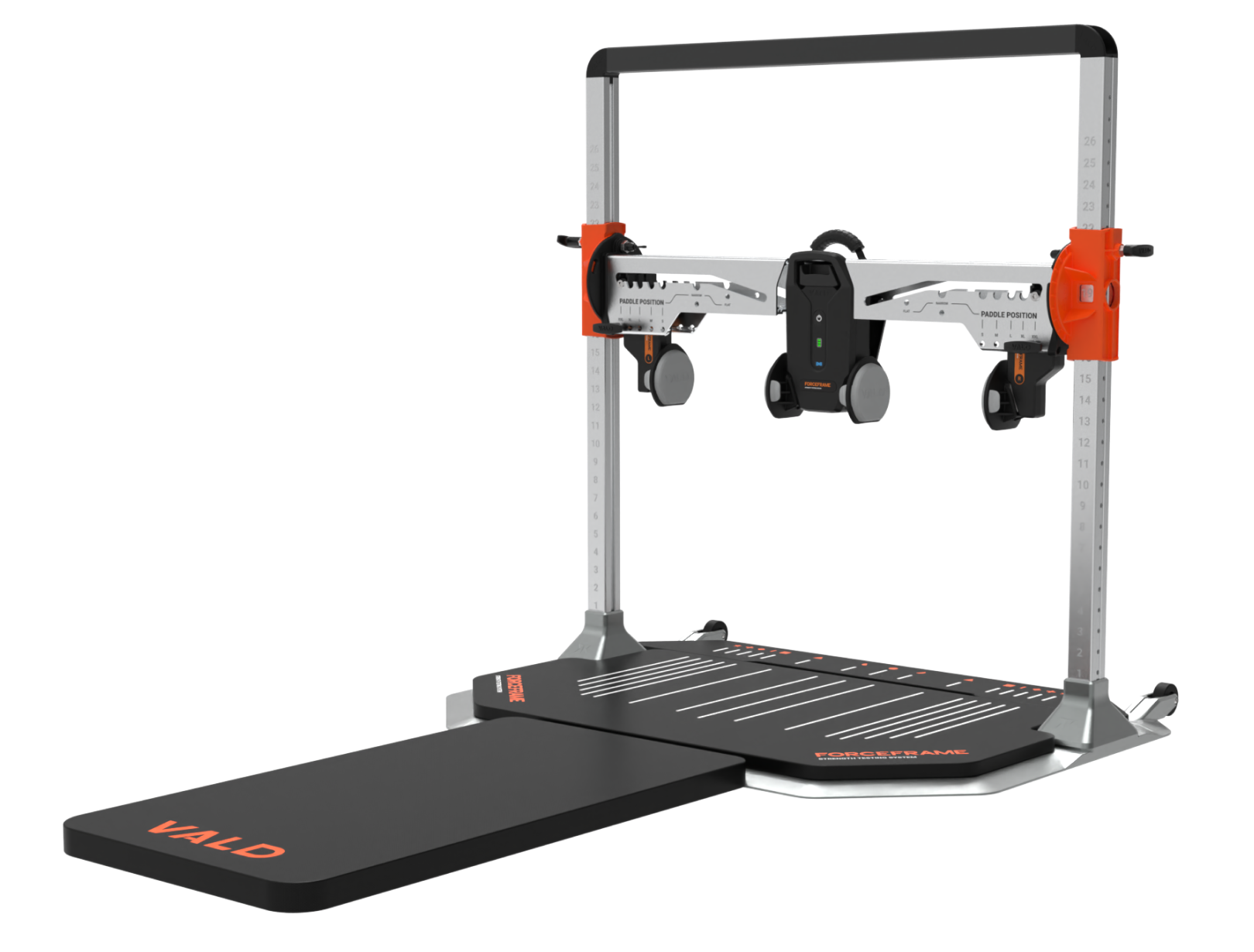
ForceFrame
Strength Testing System
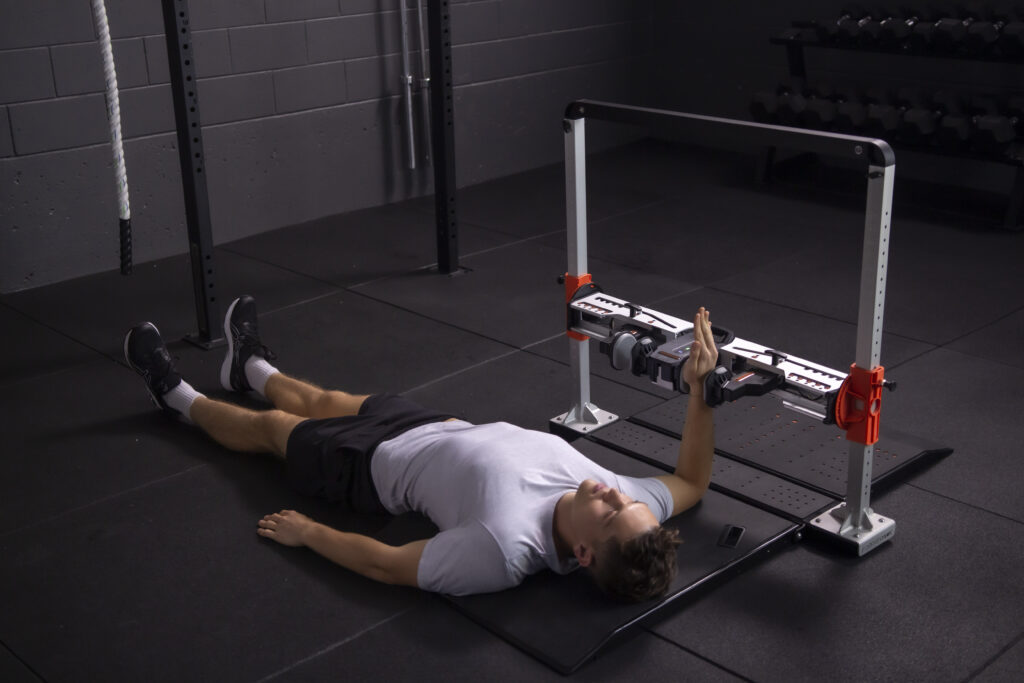
The ForceFrame allows us to measure strength in a controlled and repeatable position.
It can be particularly useful when assessing areas such as the hips, knees, shoulders and ankles, giving us precise information about how much force each side of the body can produce.
This can help identify strength deficits or differences between sides that may not be obvious during a normal physical assessment.
More importantly, those results can guide your rehabilitation.
If testing shows that a particular muscle group is significantly weaker, we can target that deficit with your exercise programme and then retest it later to see whether the programme is working.
ForceDecks
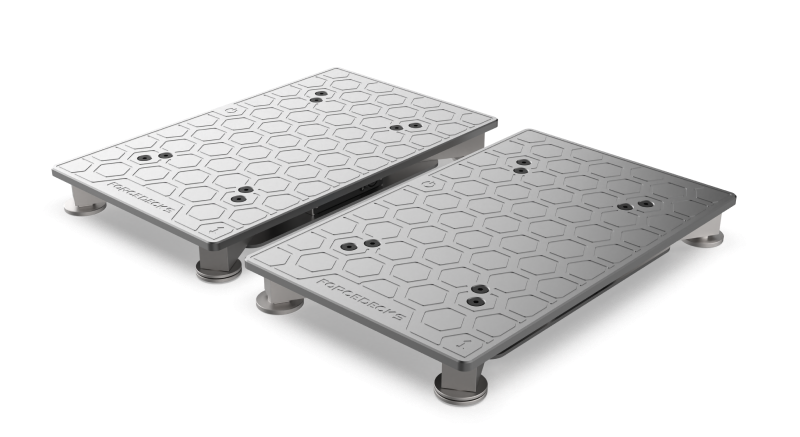
Dual Force Plate System
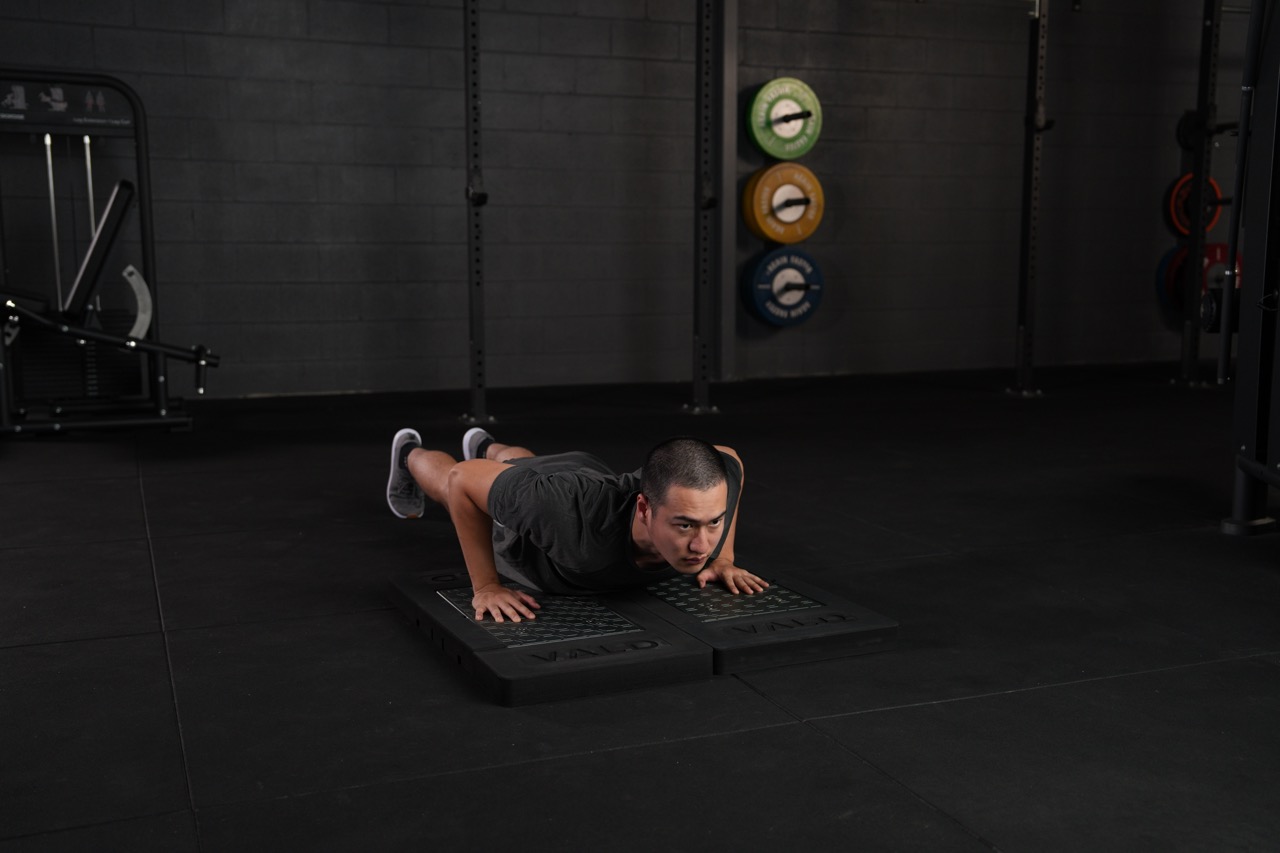
Force plates take our testing one step further by measuring how you interact with the ground during movements such as squatting, jumping and landing.
They can provide useful information about:
- How much force you produce
- Differences between your left and right sides
- How quickly you generate force
- How you absorb force when landing
- Changes in performance throughout rehabilitation
This can be particularly valuable during later-stage rehabilitation and return-to-running or return-to-sport testing, where strength alone may not tell us the whole story.
Someone may feel good and look comfortable jumping, but force-plate testing can help identify whether they are still protecting one side or producing less force through the previously injured leg.
From Testing to Targeted Training
The most important part of VALD isn’t simply collecting numbers.
It’s what we do with them.
Your results help us identify where you are now, what areas may need improvement, and what we should prioritise in your rehabilitation programme.
We can then retest at different stages to objectively see how you are progressing.
Test → Identify → Train → Retest
This creates a clearer rehabilitation pathway and allows both you and your physiotherapist to make more informed decisions about progressing exercises, returning to running, getting back into the gym, or returning to sport.
See Your Progress
Rehabilitation can sometimes feel slow, particularly when improvements are difficult to notice from week to week.
Objective testing gives us another way of showing that progress.
A movement that was painful may become comfortable. A weak muscle group may become stronger. A large difference between your left and right sides may gradually become smaller.
With VALD, your progress becomes measurable.
Whether your goal is getting back to everyday activity, the gym, running, or competitive sport, we can use the same principles used with athletes:
Measure where you are. Target what needs improving. Track your progress.
Because if we can measure it, we can make better decisions about how to improve it.